Superman
Kal-El
First Appearance
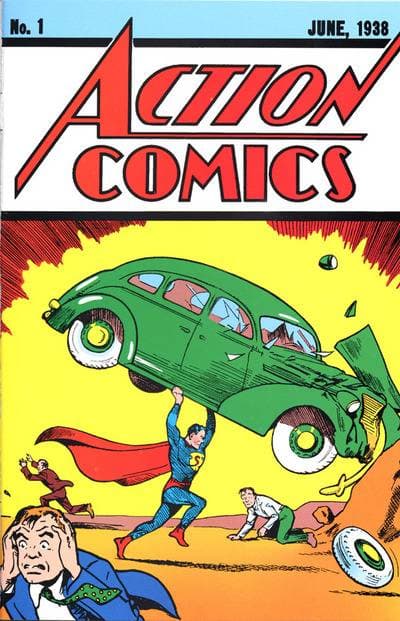
Action Comics #1 (1938)
Powers & Abilities
Teams
Also Known As
Kal-El, Clark Kent, Clark Jerome Kent, Clark Joseph Kent, Gangbuster, Nightwing, Jordan Elliot, Superboy, Superman-Prime, The Action Ace, The Big Blue Boy Scout, The Last Son of Krypton, The Man of Might, The Man of Steel, The Man of Tomorrow, Marc Costa, Nembo Kid, Aksel, Archie Clayton, Clark White, God of Strength, Flying Man, Skyman, Unblooded Sword, Un Bahle'na Gahl, Super-Squirrel, Claire Kent, Super-Sister, Kal'Amity, Nova, Sentinel
About Superman
Kal-El, the last surviving child of the doomed planet Krypton, was rocketed to Earth as an infant and raised by Jonathan and Martha Kent in Smallville, Kansas, where he became Clark Kent — mild-mannered reporter by day and the world's greatest superhero by night. Under Earth's yellow sun, his Kryptonian biology grants him a staggering array of abilities: flight, near-limitless strength, heat vision, freeze breath, invulnerability, and super speed, among many others. As Superman, he became the founding cornerstone of the DC Universe and the blueprint against which every superhero that followed has been measured.
From a collector standpoint, few characters carry the weight of Superman. His debut in Action Comics #1 (June 1938) is universally recognized as the single most important comic book ever published — the issue that launched the entire superhero genre. Graded copies have shattered auction records repeatedly, with high-grade examples commanding millions of dollars. Beyond that landmark first appearance, key issues like Superman #1 (1939), the first solo title for any superhero, remain among the most coveted books in the hobby. Silver Age collectors prize titles like Action Comics #252, which introduced Supergirl, and key Kryptonite and villain debut issues that defined the mythology.
Superman's most celebrated story arcs span decades of publishing history. The Death of Superman storyline from 1992 — running through Superman #75 — became a genuine pop-culture phenomenon, with the black-bagged edition selling millions of copies and igniting a new generation of collectors. Alan Moore's Whatever Happened to the Man of Tomorrow? offered a definitive Silver Age farewell, while John Byrne's Man of Steel miniseries rewrote the character's origin for a modern era. The Exile in Space saga, the Our Worlds at War crossover, and Grant Morrison's Action Comics run during The New 52 each represent pivotal moments that serious Superman collectors track down. Geoff Johns and Gary Frank's Brainiac arc and Secret Origin miniseries are highly regarded modern runs that continue to appreciate in the back-issue market.
Collecting Superman means investing in the foundation of American comic book history. Whether you're chasing a Golden Age Action Comics, a high-grade Silver Age Superman title, or the full run of landmark storylines from the Bronze and Modern Ages, these books hold cultural and monetary significance unlike almost anything else in the hobby. Superman's publishing legacy spans over eight decades across hundreds of series, team books, and crossover events — making him one of the deepest and most rewarding characters to collect at any level.