Plastic Man
Patrick Edward O'Brian
First Appearance
Police Comics #1 (1941)
Powers & Abilities
Teams
Also Known As
The Eel, Eel O'Brian, Greed, Plas, Ralph Johns, The Pliable Paladin, Mr. Bendy, Super Stretchy Guy, The Waxwork Whacko, Edward O'Brian, Kyle Morgan, Master of Metamorphosis, Man of a Million Shapes, Patrick Edward O'Brian
About Plastic Man
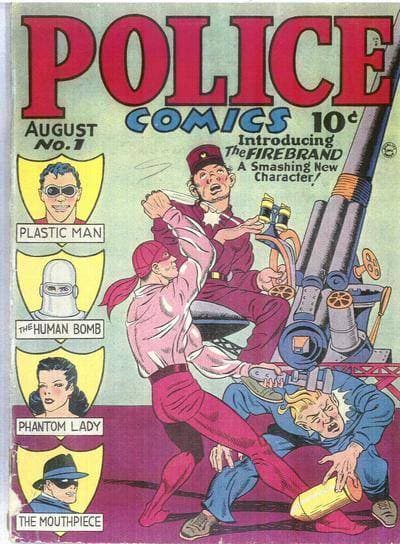
Patrick Edward O'Brian began his life on the wrong side of the law as a small-time crook known as Eel O'Brian. During a botched robbery at a chemical plant, he was shot and doused in an experimental acid solution that would change everything. Left for dead by his crew, Eel was taken in by monks who nursed him back to health — and as he recovered, he discovered the acid had fundamentally rewritten his biology, granting him the ability to stretch, reshape, and mold his body into virtually any form imaginable. That act of unexpected kindness sparked a genuine moral transformation, and Eel O'Brian retired for good, reinventing himself as Plastic Man, a hero who would use his impossible powers in service of justice. His debut in Police Comics #1 (1941) from Quality Comics makes him one of the most historically significant characters in the entire medium — a book that serious Golden Age collectors have long considered a crown jewel.
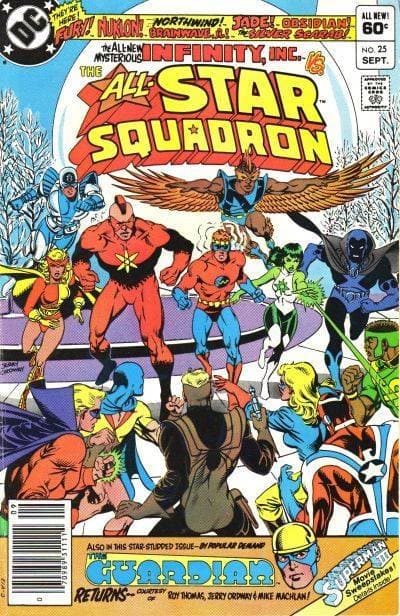
What sets Plastic Man apart from other stretchy heroes is the sheer scope of his abilities. Beyond elasticity, Plas can alter his density, shift his color and texture to perfectly mimic other people or objects, duplicate his form, and even resist damage that would destroy virtually any other hero. His physiology borders on true immortality — in some storylines he has endured for thousands of years, his malleable cells simply refusing to die. This makes him simultaneously one of DC's most powerful and most underutilized characters, a fact that only deepens collector interest whenever he takes center stage. DC eventually acquired the Quality Comics library and folded Plastic Man into the main DC Universe, where he went on to serve with legendary teams including the Justice League of America, the All-Star Squadron, and the Justice Society International.
Some of Plastic Man's most celebrated modern appearances come from writer Grant Morrison's Justice League run, where he was portrayed as an unpredictable wildcard whose power set was depicted as genuinely terrifying in the wrong hands. Kyle Baker's Eisner Award-winning Plastic Man ongoing series from 2004 is another landmark — a comedic masterpiece that showcased the character's unique tone and cemented him as one of DC's most versatile icons. More recently, his inclusion in The Terrifics alongside Mr. Terrific, Metamorpho, and Phantom Girl introduced him to an entirely new generation of readers hungry for a Fantastic Four-style DC team book.
For collectors, Plastic Man represents an extraordinary range of opportunity. Police Comics #1 is a true Golden Age holy grail — affordable raw copies exist for determined hunters, while high-grade CGC examples command serious money at auction. His Silver and Bronze Age appearances are consistently undervalued, and key modern issues tied to major storylines remain within reach of mid-level collectors. Whether you're building a Golden Age run, chasing key team appearances, or hunting the Baker-era series, Plastic Man's back catalog rewards patient collectors with history, humor, and genuine investment potential.