Puma
Thomas Fireheart
First Appearance
The Amazing Spider-Man #256 (1984)
Powers & Abilities
Teams
Also Known As
Thomas Fireheart
About Puma
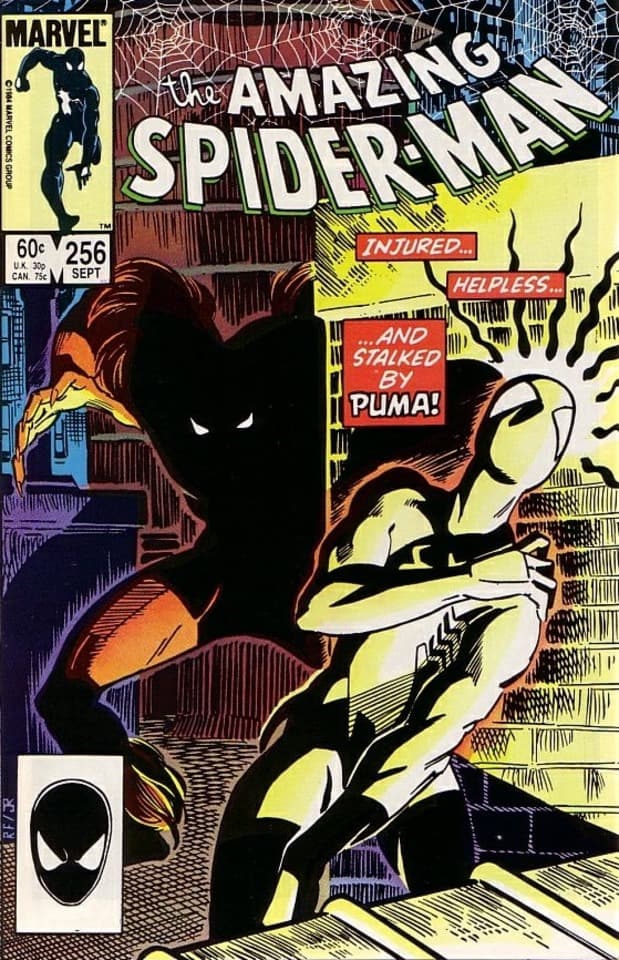
Puma — the alter ego of Thomas Fireheart — is one of Marvel's most compelling anti-hero figures, blending supernatural mysticism with razor-sharp martial prowess and the kind of old-money corporate power that makes even Tony Stark take notice. A member of a fictional Native American tribe, Fireheart was selectively bred and ritually trained over generations to become the ultimate warrior, a spiritual guardian destined to battle a world-ending threat. That training unlocked a shape-shifting ability that transforms him into a fearsome humanoid panther, gifting him with senses and physical capabilities that push deep into superhuman territory. His first appearance in The Amazing Spider-Man #256 (September 1984) is the key book for collectors — a Bronze Age gem from writer Tom DeFalco and artist Ron Frenz that introduced a villain-for-hire with real depth and staying power.
What separates Puma from a long list of Spider-Man antagonists is the layered evolution of his relationship with Peter Parker. Initially contracted to eliminate Spider-Man, Fireheart instead developed a warrior's respect — and eventually a strange, grudging alliance — with his target. This dynamic played out across a memorable stretch of Amazing Spider-Man issues in the mid-to-late 1980s, culminating in Fireheart's controversial acquisition of the Daily Bugle as a gesture of personal honor. That subplot put him at the center of one of the era's most talked-about supporting cast shake-ups, cementing his role as far more than a throwaway hired gun.
Fireheart's appearances expanded well beyond Spider-Man's corner of the Marvel Universe. He ran with the Outlaws, tangled with the Wild Pack, and later surfaced in the morally murky ensemble of M.O.D.O.K.'s 11, a fan-favorite limited series that gave him some of his most entertaining page time. During the Initiative era following Civil War, Puma was drawn back into the superhero infrastructure in ways that tested his independence and tribal code, adding modern relevance to a character rooted in Bronze Age storytelling traditions.
For collectors, the hunt starts with Amazing Spider-Man #256 — a book that remains surprisingly affordable given its significance, making it an excellent pickup before broader collector attention catches up. Key supporting appearances in the surrounding ASM run of the mid-1980s round out a strong collection, while MODOK's 11 offers a more recent and still-undervalued limited series worth grabbing in single issues. Puma represents exactly the kind of character serious Marvel collectors prize: rich backstory, cross-title appearances, a visually distinctive design, and enough story left untold to make any future spotlight series an instant must-buy.