Crazy Jane
Kay Challis
First Appearance
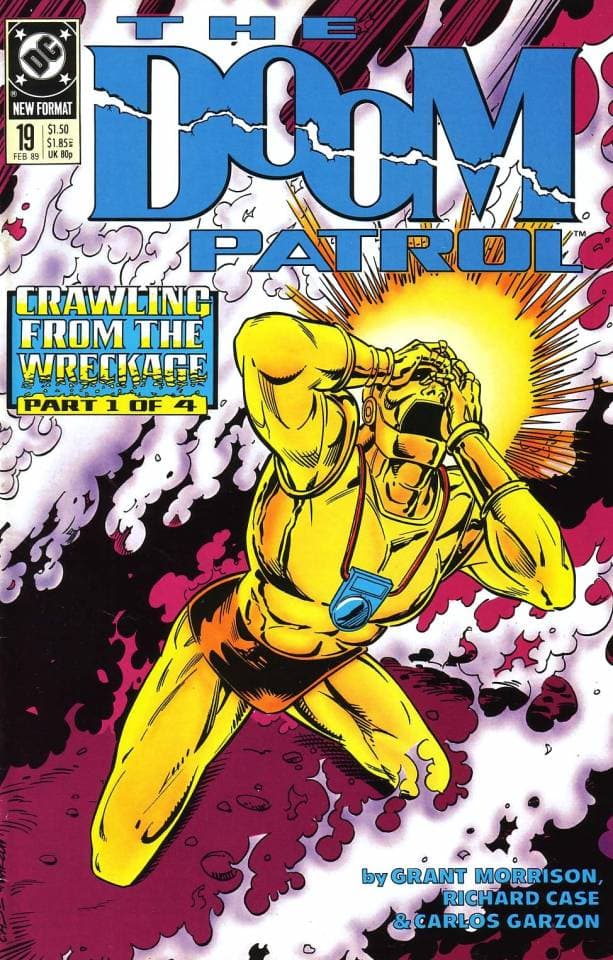
Doom Patrol #19 (1989)
Powers & Abilities
Teams
Also Known As
Kay Challis, Baby Doll, Baby Harlot, Bizzie Lizzie Borden, Black Annis, Butterfly Baby, Daddy, Driller Bill, Driver 8, Elastiwoman, Flaming Katy, Flit, Hammerhead, Jack Straw, Jill-In-Irons, K-5, Kay, Kit W'The Canstick, Lady Purple, Liza Radley, Lucy Fugue, Mama Pentecost, Me, Multi-Mother, Dr. Harrison, All-Jane
About Crazy Jane
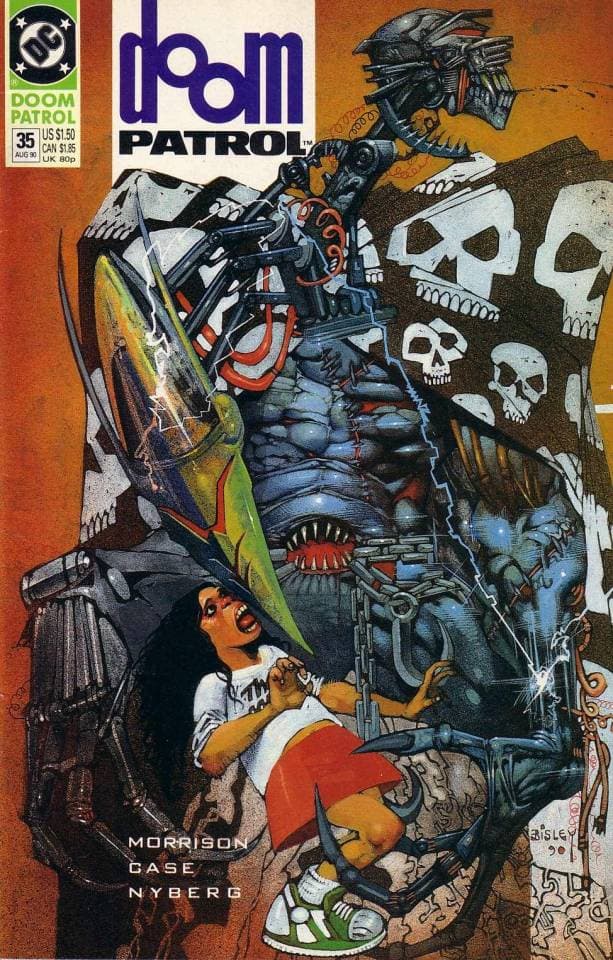
Crazy Jane is one of the most psychologically complex and narratively daring characters DC Comics ever introduced, making her debut in Doom Patrol #19 (1989) during Grant Morrison's legendary run on the title. Created as a central figure in Morrison's radical reimagining of the team, she is the living embodiment of 64 distinct personalities — each one a separate individual who emerged as a survival mechanism following severe childhood trauma. What makes her truly extraordinary in the superhero landscape is that each personality carries its own unique superpower, from pyrokinesis and telepathy to phasing, shape-shifting, and berserker strength. No other character in mainstream comics so boldly merged psychological horror, feminist subtext, and superhero spectacle into a single figure.
Her real name is Kay Challis, and her origin is rooted in devastating personal history that Morrison handled with unusual sensitivity for the era. The Underground — her internal mindscape — became one of comics' most haunting metaphorical settings, a place where her personalities lived, struggled, and sometimes died. The personality known as Crazy Jane served as the primary interface with the outside world, though collectors and readers came to know and cherish names like Driver 8, Hammerhead, Flit, Black Annis, and Lucy Fugue as fully realized individuals in their own right. Her relationship with Cliff Steele, the Robotman, became the emotional backbone of Morrison's entire Doom Patrol run — a tender, complicated bond between two people who barely recognized themselves as human anymore.
For collectors, Doom Patrol #19 is the key book — a mid-run issue that has grown steadily in demand as Morrison's Doom Patrol has been recognized as one of the defining superhero comic runs of the late 20th century. Her appearances throughout issues #19–63 of that series represent some of the most inventive single-issue storytelling of the era, with landmark arcs like the Brotherhood of Dada storyline and the Painting That Ate Paris cementing her place in the weird, wonderful corners of DC history. She also appears in subsequent Doom Patrol volumes and has made periodic returns whenever writers want to tap into the soul of what makes that team resonate.
Crazy Jane is worth collecting because she represents a turning point — a moment when superhero comics decided a character's inner world could be as vast and treacherous as any cosmic battlefield. Her key issues are increasingly hard to find in high grade, and as Morrison's Doom Patrol continues to gain new audiences through reprints and cultural reassessment, demand for her earliest appearances keeps climbing. Whether you're building a Morrison run, a Doom Patrol collection, or simply hunting the most distinctive character designs of her generation, Crazy Jane's books are essential shelf pieces.